
Nate Media – UN General Assembly – December 13th 2023
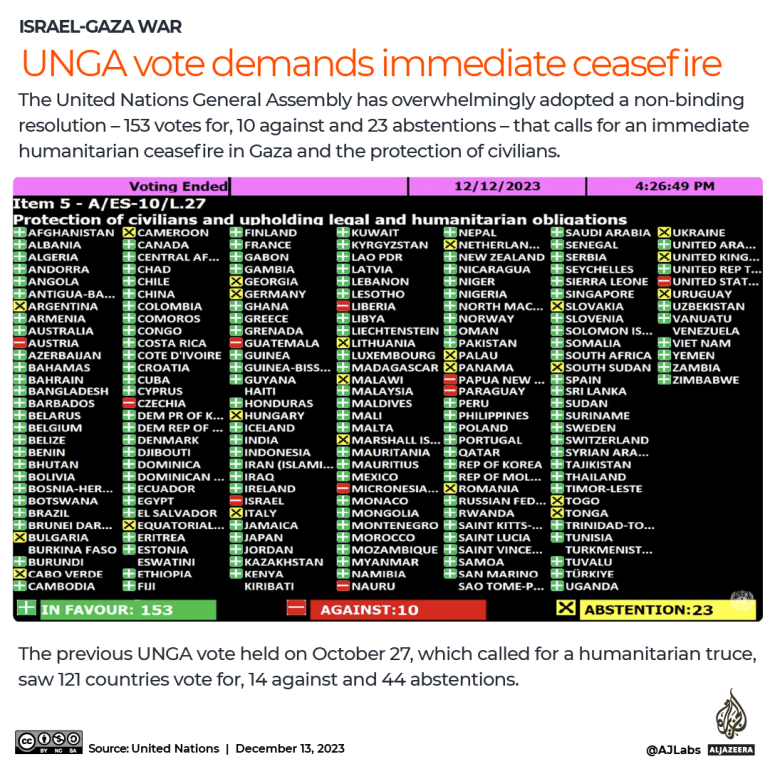
In a resounding show of global solidarity, the 193-member United Nations General Assembly (UNGA) has overwhelmingly voted in favor of a resolution calling for a humanitarian ceasefire in the war-torn Gaza Strip. The non-binding resolution passed with an overwhelming majority, with 153 countries voting in favor, 23 abstaining, and 10 countries, including the United States and Israel, voting against it.

The resolution, although not legally binding, carries significant symbolic weight as it represents a unified international stance calling for an end to the protracted conflict in Gaza. The vote reflects mounting international pressure on Israel to halt its months-long assault on the region, where more than 18,000 Palestinians have lost their lives, a majority of whom are women and children. Additionally, over 80 percent of Gaza’s 2.3 million residents have been displaced due to relentless air strikes and a suffocating Israeli siege.
Saudi Arabia’s UN ambassador, Abdulaziz Alwasil, expressed gratitude to those supporting the resolution, stating, “We thank all those who supported the draft resolution that was just adopted by a huge majority. This reflects the international position to call for the enforcement of this resolution.”
The dire humanitarian conditions in Gaza, described by UN officials as “hell on earth,” have been exacerbated by severe restrictions on access to food, fuel, water, and electricity. The situation prompted the international community to rally behind the UNGA resolution, a follow-up to a failed attempt in the UN Security Council (UNSC) last Friday.
During the UNSC vote, the United States cast the sole dissenting vote, vetoing the proposed resolution, and the United Kingdom abstained. Unlike UNGA votes, resolutions from the UNSC hold the power to be binding, making Friday’s outcome a significant setback for advocates of an immediate ceasefire.
UN Secretary-General Antonio Guterres took an unusual step in response to the UNSC failure, invoking Article 99 of the UN Charter, allowing him to issue warnings about serious threats to international peace. This was the first use of this provision since 1971.
Despite this, the non-binding UNGA resolution faced opposition from the United States once again, indicating a persistent divide on the international stage regarding how to address the Gaza conflict. The resolution’s passage, however, underscores the widespread global sentiment calling for an end to the violence and suffering in Gaza.
As the international community grapples with finding a diplomatic resolution to the crisis, the UNGA’s decisive vote stands as a testament to the urgency and gravity of the situation in Gaza, urging immediate action to alleviate the humanitarian crisis and bring an end to the devastating conflict.


